
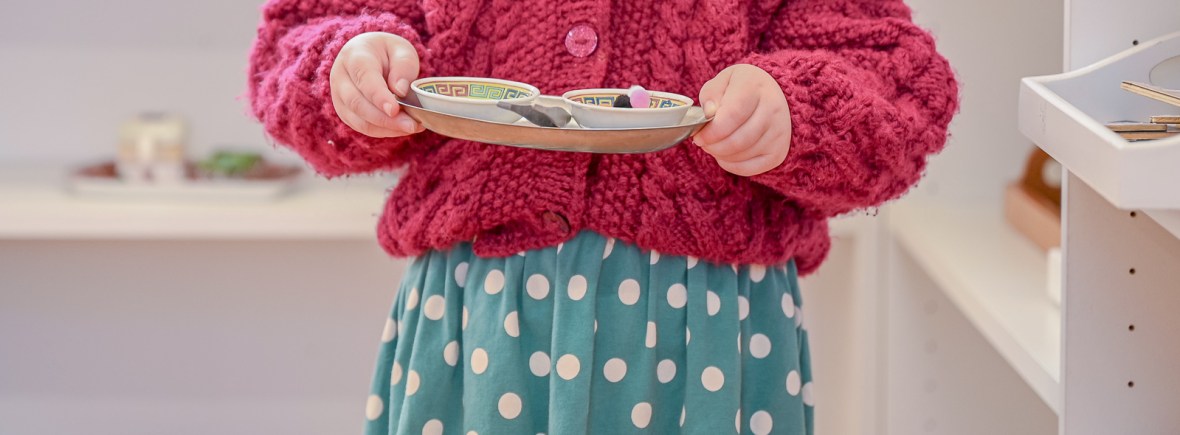
The essential thing is for the task to arouse such an interest that it engages the child’s whole personaity.
Maria Montessori
Practical Life
Details
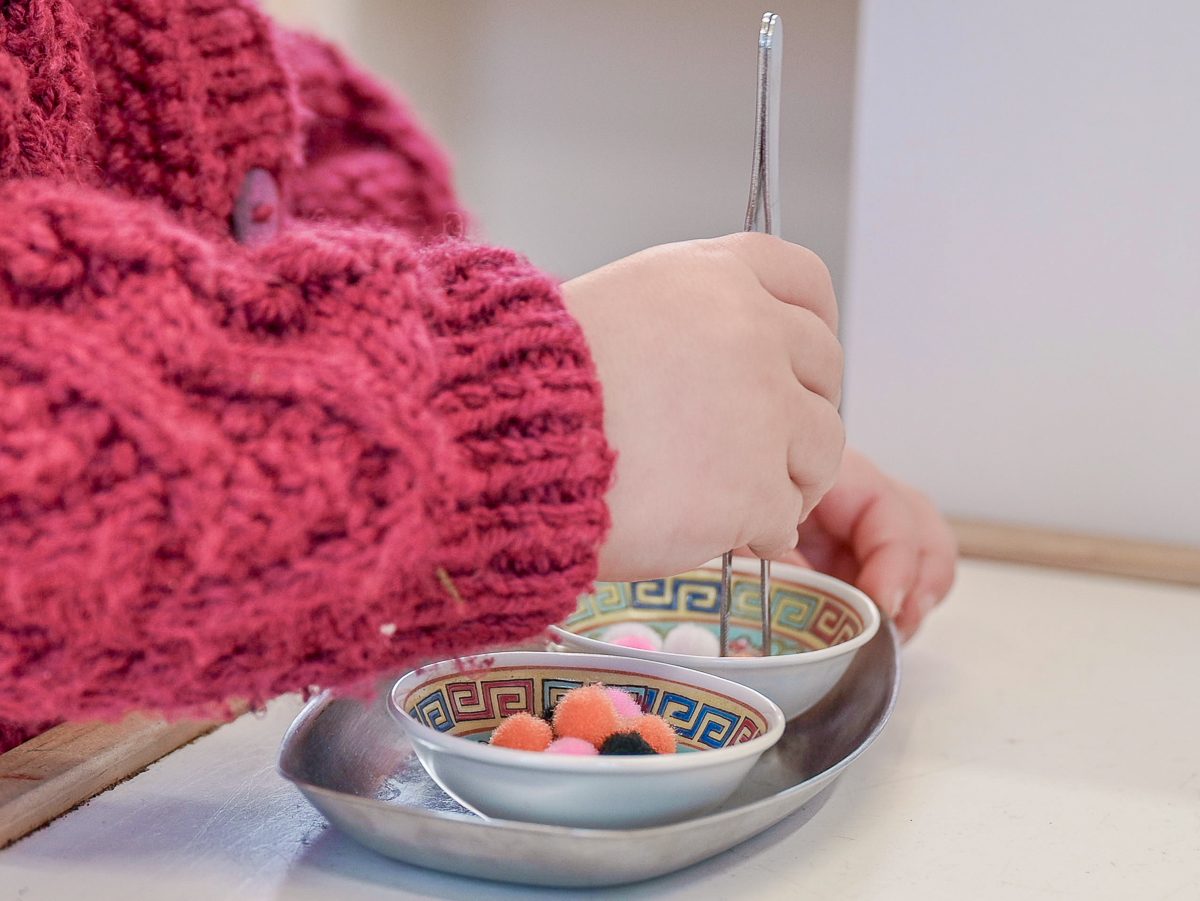
The practical life section is the most important area in a Montessori classroom. It is through these materials that the child develops the self-confidence, control, and concentration essential for mastery of the other more advanced areas of the Montessori curriculum.
Children will be naturally drawn to this area because these materials are most familiar to them. This familiarity also serves to provide the children with a feeling of security and well-being. The activities will contain objects and materials that are normally encountered in the everyday living experiences of the children’s culture. Many of them are fundamental activities that children need to master to be able to live comfortably in the real world. Most of the activities of practical life will fall into four main categories: grace and courtesy, care of self, control of movement, and care of the environment.
The purpose of practical life activities:
• To develop and perfect muscle control and coordination through organization of movement.
• To develop a sense of physical and mental order through exactness in use of objects and working in definite sequence.
• To develop understanding through control of the environment resulting in a sense of dignity and self-confidence, joy in completing tasks, and generation of social feeling among children.
• To develop concentration and persistence through focusing of attention on work, thus allowing independence and self-reliance to be achieved.
•To establish the procedure for choosing work after a lesson has been placed on the shelf and returning materials to their proper place on the shelves.
•To establish respect for other’s work by learning that materials are never taken from another child but only from the shelves.
Sensorial
Details
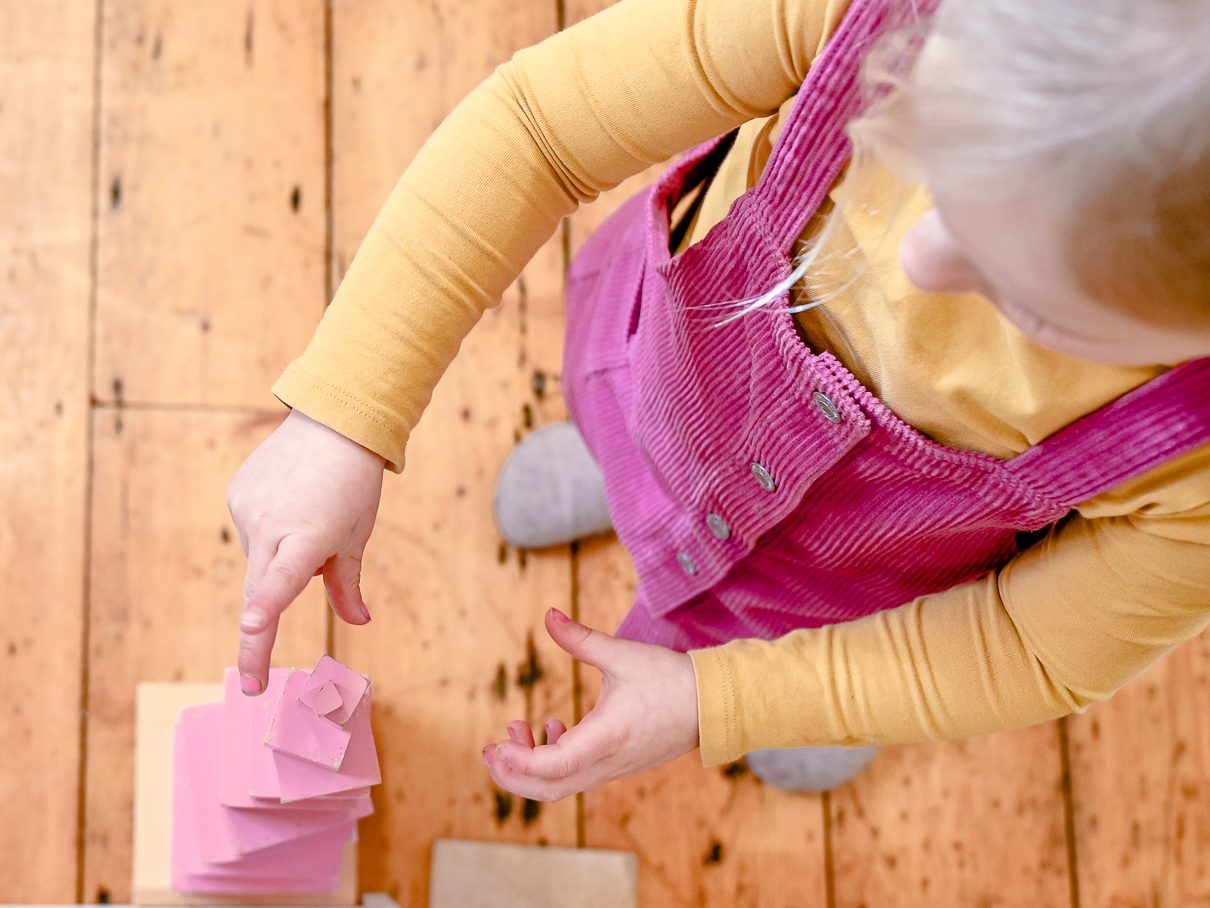
The sensorial materials help the child to become aware of detail. Each of the activities isolate one defining quality, such as colour, weight, shape, texture, size, sound, and smell. It is in this area that math concepts are first introduced and internalized.
The primary purpose of the sensorial activities is to help the child in their effort to sort out the many and varied impressions given by the senses. They help to do this in four ways: they are specifically designed to develop, order, broaden and refine sense perception. The activities identify a single quality, reveal a range of small differences in the quality and explore patterns in those differences. The child’s understanding of the world is “broadened” when the sensorial activities awaken certain sense experiences that were previously unexplored, such as the feel of shapes or the smell of spices. They allow the child to experience and concentrate on qualities in perfect clarity and isolation.
The sensorial activities also provide the child with basic skills needed for mathematics work, including, calculation of amount or degree, exactness in perception and dexterity, discrimination among similarities, repetition, set recognition, algebraic analysis, and recognition of progression in a series. Most of the sensorial materials provide the child with experiences in more than one of these skills
Resource: Gettman, D., 1987. Basic Montessori: Learning Activities for Under-Fives St. Martin’s Press, New York. P. 65 and 160.
Linguistic
Details
The linguistic area contains many learning opportunities such as:
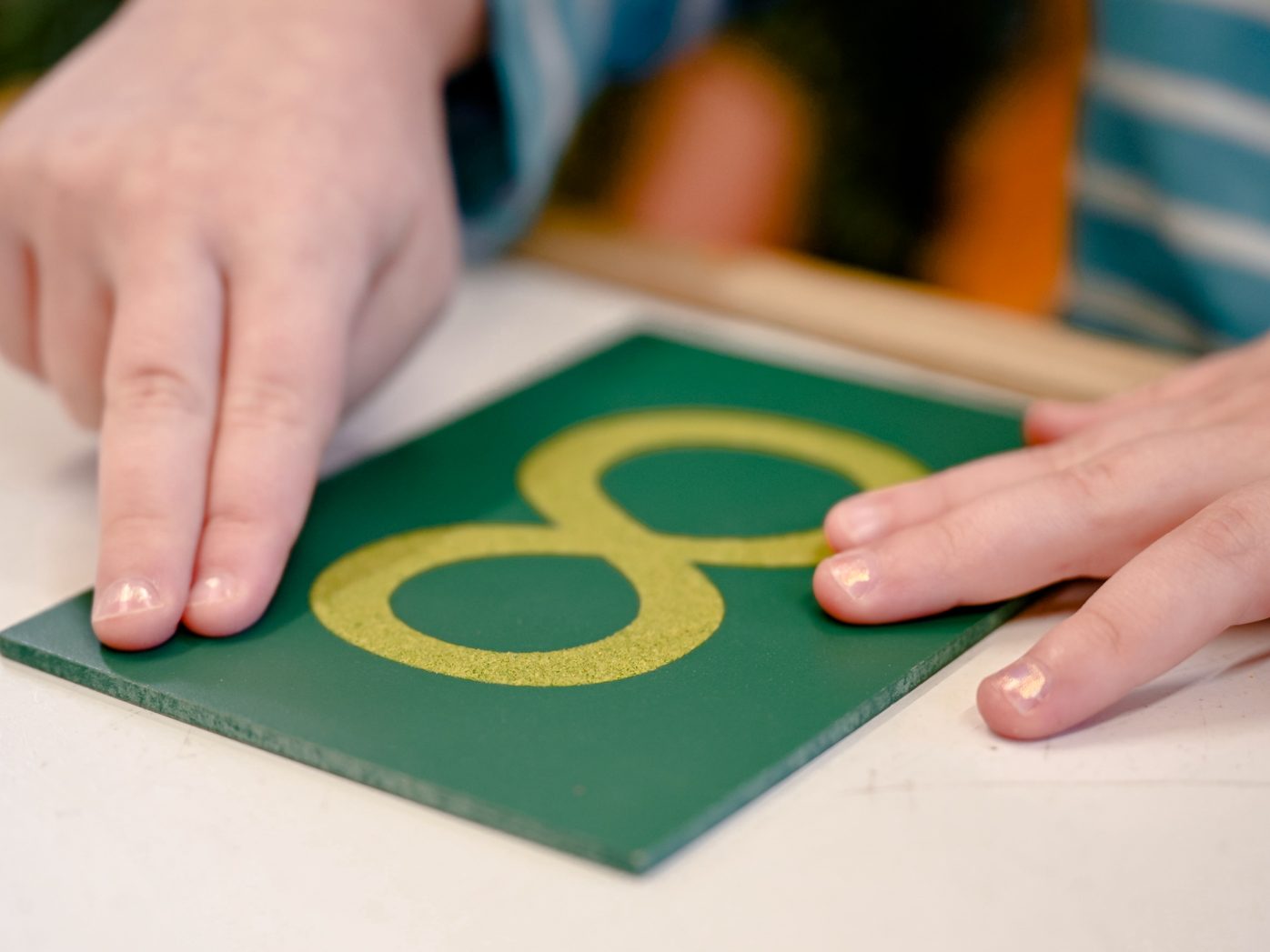
• Learning the shapes and sounds of the letters
• Perfecting the fine motor skills for writing
• Vocabulary development
• Matching of words and pictures
• Reading silently
• Reading development-reading word lists, sentences, stories
• Parts of speech-word games with nouns, verbs and adjectives
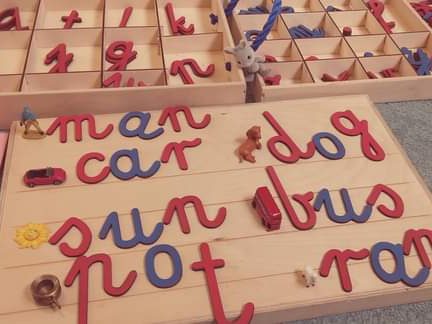
The development of language in early-childhood classrooms is an umbrella for the entire Montessori curriculum. Language learning occurs most profoundly in the moment-to-moment life of interactions within the classroom. Children learn to listen, speak, and later to write and read. A balanced environment, one that is open yet not chaotic or inappropriate, is the most conducive to language learning. Activities related to the development of early-literacy skills greet young children when they visit the language area of a Montessori classroom. These activities include opportunities for young children to expand vocabulary, listen carefully to common sounds, and look carefully to find likenesses and differences among objects and pictures. Matching sets of objects, learning the names of household tools, unusual fruits and vegetables and geometric shapes are other activities which build language and early literacy skills and will be found in a Montessori classroom. Dr. Maria Montessori personally developed only three language materials for the early childhood classroom: the metal insets, the sandpaper letters, and the moveable alphabet. However, they have proven astoundingly effective. In fact, educators outside of Montessori have recognized the effectiveness of these materials and have created similar activities now being used in a variety of early-childhood settings.
In Montessori classrooms, teachers incorporate both phonetic and whole-word strategies. To meet the needs of all children, teachers need to use a variety of strategies.
Key concepts of Montessori teachers are:
• Provision of an array of print activities
• Recognition that there is more than one way that children learn to read, so a variety of approaches will be used
• Demonstration of literacy often
• Writing meaningfully in front of children and reading back what is written
• Providing opportunities for auditory and visual discrimination activities
• Demonstration of an appreciation of words, by playing funny, nonsense games, commenting on the way new words sound
• Reading award-winning books to the children on a variety of subjects
• Read, read, read aloud to children and encouraging the same at home. (Not only to the whole class but in small groups and one on one)
Resource: Epstein, A., “Montessori Early Childhood Language Lifelong Literacy”, Tomorrow’s Child, 4:1, 13-17.
Mathematical
Details
By using concrete materials during the early years, the child can learn the basic concepts of mathematics. Montessori education provides many materials to develop mathematical skills. Not only will the child be able to know quantities and systems but will understand the process as well-a KERA requirement.
Through the early sensorial activities an understanding of qualities foundation has been laid for the child. In addition, the Montessori child is introduced to the required skills for mathematics by many aspects of both the practical life activities and the sensorial activities.
Mathematics activities are organized into five groups: introduction to numbers, introduction to the Decimal System, introduction to tens, teens and counting, arithmetic tables, and abstraction. The preschool classroom activities will typically be activities found under group one through group four. Group one introduces units of quantity and illustrates their use in exercises that count up to ten. The mathematics work proceeds as in all Montessori learning, from the most concrete to abstract, as the child is ready.
Montessori students use hands-on learning materials that make abstract concepts clear and concrete. This approach to learning offers a clear and logical strategy for helping students understand and develop a sound foundation in mathematics and geometry.
Resource: Gettman, D., 1987. Basic Montessori: Learning Activities for Under-Fives. St. Martin’s Press, New York, 159.
Cultural
Details
Science is an integral element of the Montessori curriculum. The program is designed to cultivate the child’s curiosity and determination to discover the truth for themselves. They learn how to observe patiently, analyze, and work at each problem. Students engage in field trips and hands-on experiments and typically respond with enthusiasm to the process of carefully measuring, gathering data, classifying and predicting the outcome. One goal of Montessori science is to cultivate a lifelong interest in observing nature and discovering more about the world in which we live. Some science activities you could see in a Montessori classroom are activities of magnetism, weights, growing plants and classification of plants and animals.
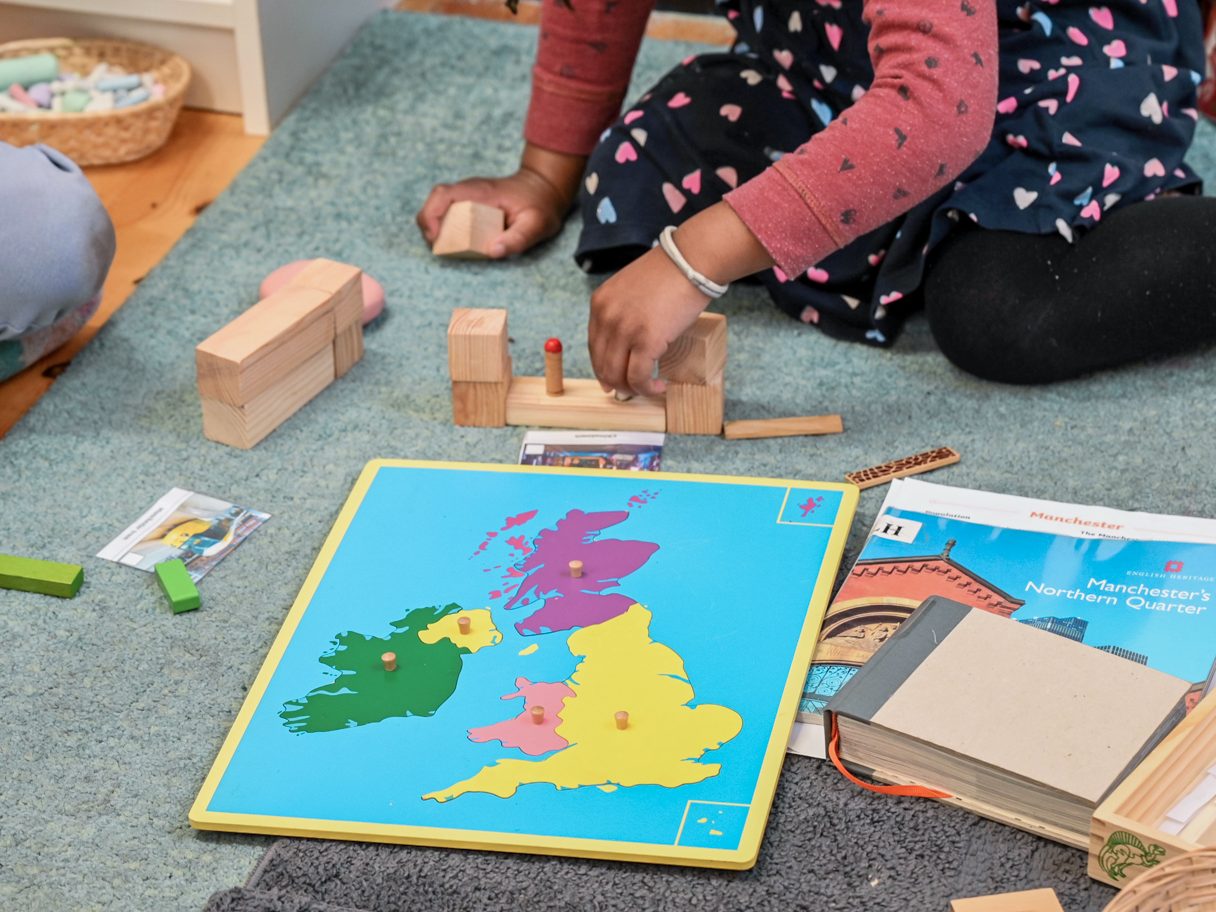
Montessori preschools offer many opportunities for the child to expand knowledge of the world during the early years when they are motivated by spontaneous interest. The materials provided in the social studies area spark this interest. Some of the materials in this area are: Land and Water Globe, Continent Globe, World Map Puzzle, picture packets of animals and people in other countries and career exploration.
The classroom offers children a concrete representation of history by letting them work timelines. Some examples of study through the use of timelines are: prehistoric life, presidents, the student’s own life timeline or the teacher’s life timeline and the child’s day. Other cultures as well as our own are explored. Important figures from the past are discussed.
Resource: Seldin, T., “Montessori’s Integrated Spiral Curriculum, ” Tomorrow’s Child. 4:1,5-11.
Creative
Details
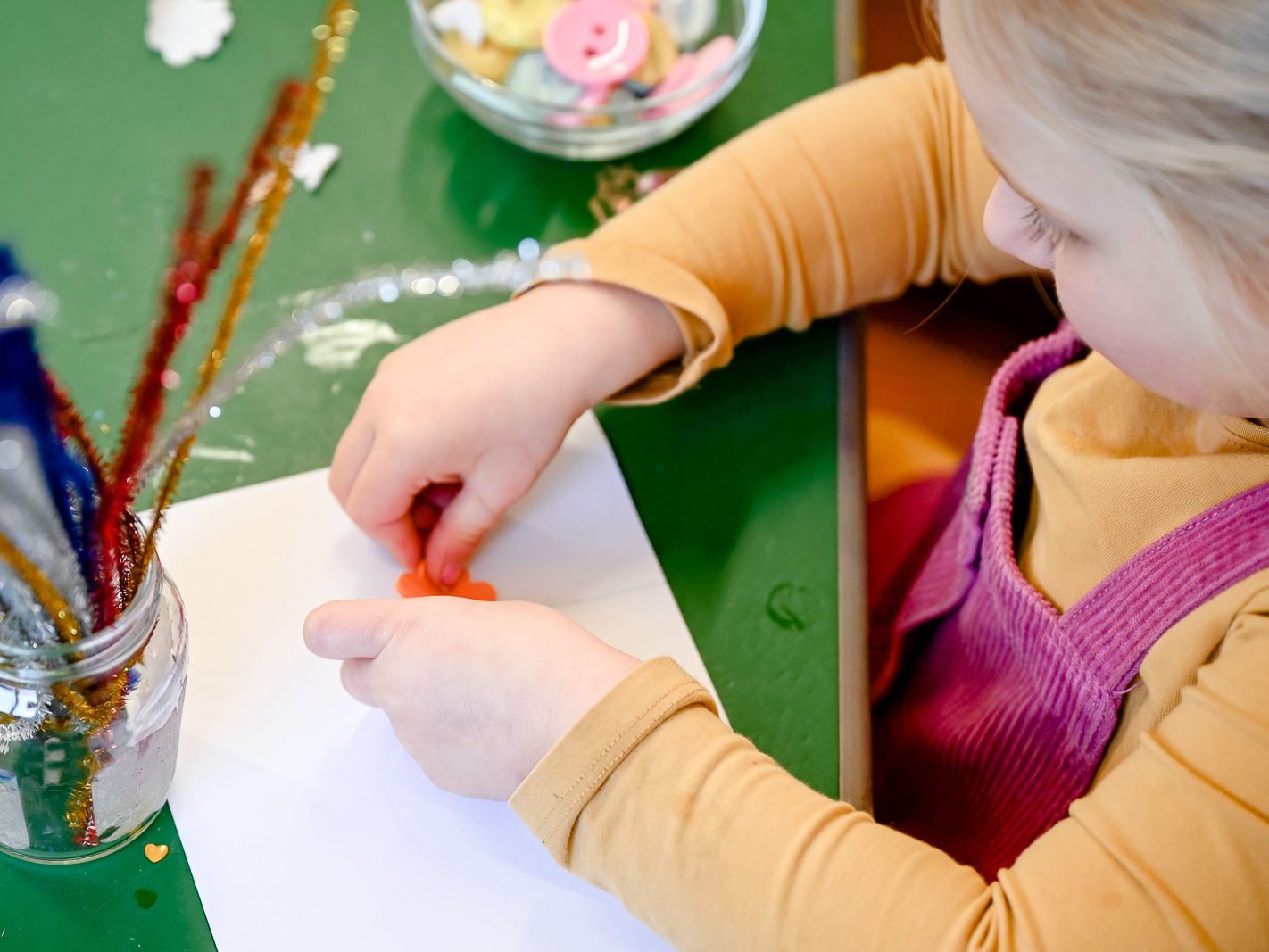
As in Montessori setting we follow children need to be and to be able to unfold. We want them to be spontaneous and expressive, also through different mediums. Our creative area facilitates freedom to explore with different open ended resources. It is all about engagement in a process. We are looking for individual engagement of the child in a process of creation and participation not the end product.
Our children experiences creativity not only through different art projects, but also through the movement and music and while playing outdoors.
Outdoor Education
Details
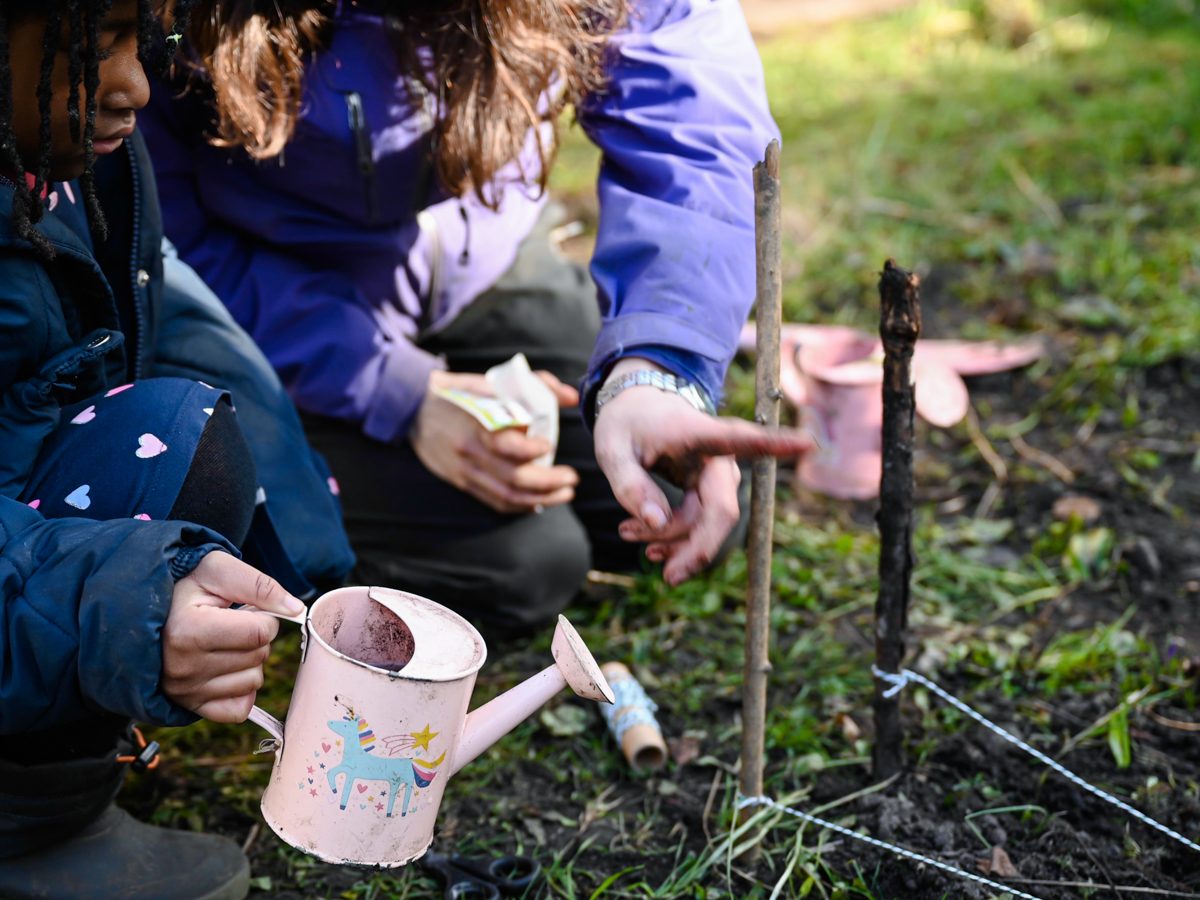
Here at Manchester Montessori, outdoor education holds a special place. Nature in all its wonder is woven into the Montessori Method and Forest School is closely aligned in its practice and principles. Forest School is a child-led learning process which views the learner holistically, supporting the development of all aspects of a child’s learning : socially, emotionally, physically, intellectually and spiritually. Forest School is a long term process which supports appropriate risk taking, play and exploration. We learn about the world around us, in all seasons, fostering a deep connection to nature and our place within it through hands-on experiences.
Our outdoor sessions are delivered by Emelie Bernard who is a trained Level 3 Forest School practitioner. Emelie holds additional outdoor First Aid qualifications, insurance cover and is active in pursuing Continuous Professional Development to add to her knowledge and skill set. The outdoor sessions at Manchester Montessori are influenced by Emelie’s Forest School training but also take inspiration from other Outdoor Education sectors such as Environmental Education, Bushcraft, permaculture and horticulture as well as curriculum based Outdoor Learning. Our sessions remain unique to our setting and to the children we serve.
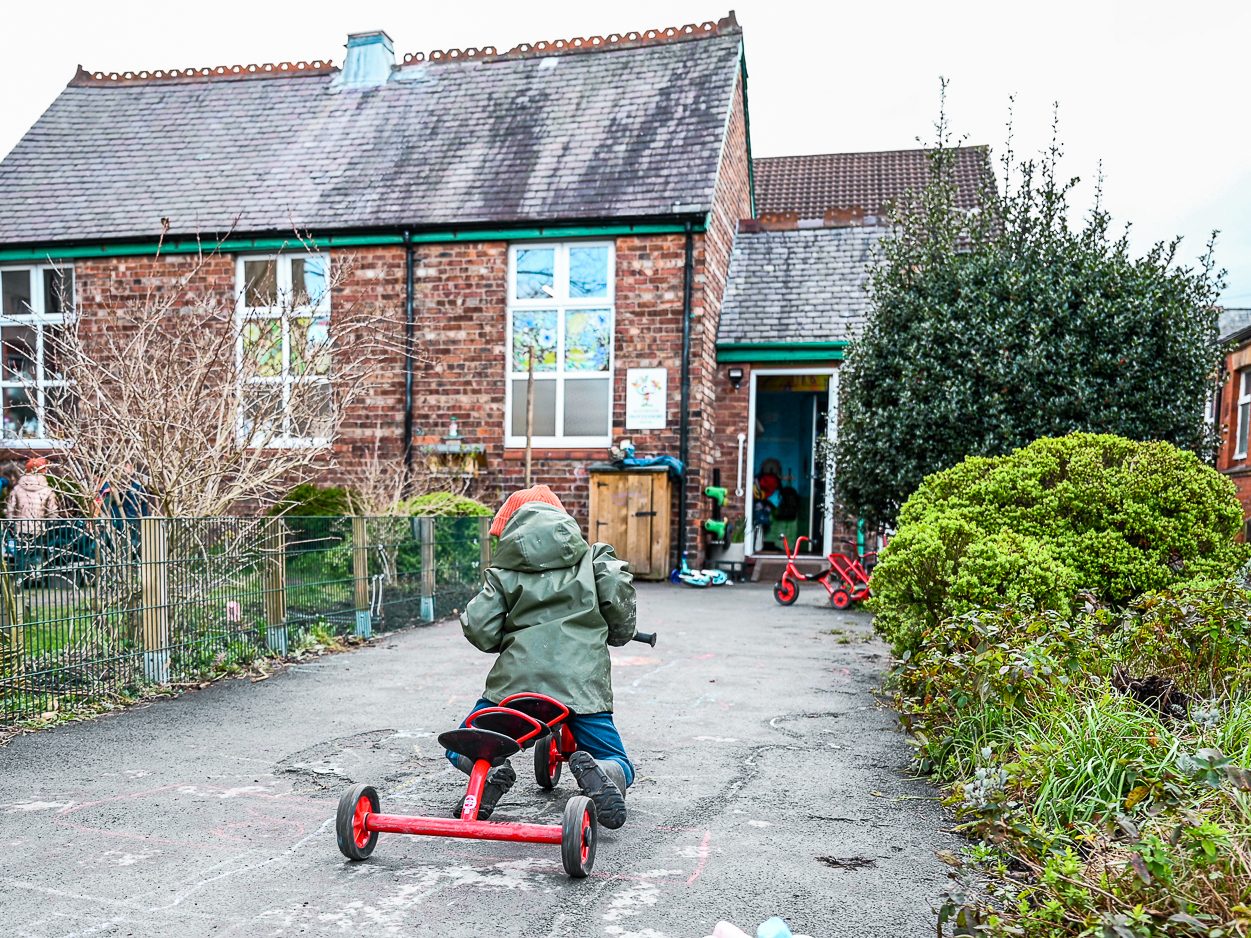
At Manchester Montessori House, our outdoor sessions take place in our fenced garden just outside the main building. The area includes a range of different plants and flowers, wild cherry trees, Iris, blackberries and a willow den. Trips to local woodland and parks may also be planned in the future. Our outdoor sessions run throughout the year, no matter the weather. When raining, an outdoor shelter is set up using tarpaulins for the children to use. Hot/cold drinks will be made available. In case of very strong winds or storms, sessions will move inside Montessori House.
Spending time outside is energising, uplifting and grounding. For children, being in nature improves their mental health and well-being, enhances learning and increases self-esteem and self-confidence. Nature is a multisensory environment which can lessen stress, monotony and soothe us on a deep level. Our sessions outdoors follow the children’s wonder and curiosity and supports their need to explore and interact with nature. From making potions to splashing in puddles, making and baking in the mud kitchen or finding mini beasts, our sessions outdoors are full of adventure and learning!
“There must be provision for the child to have contact with nature; to understand and appreciate the order, the harmony and the beauty in nature.” – Maria Montessori
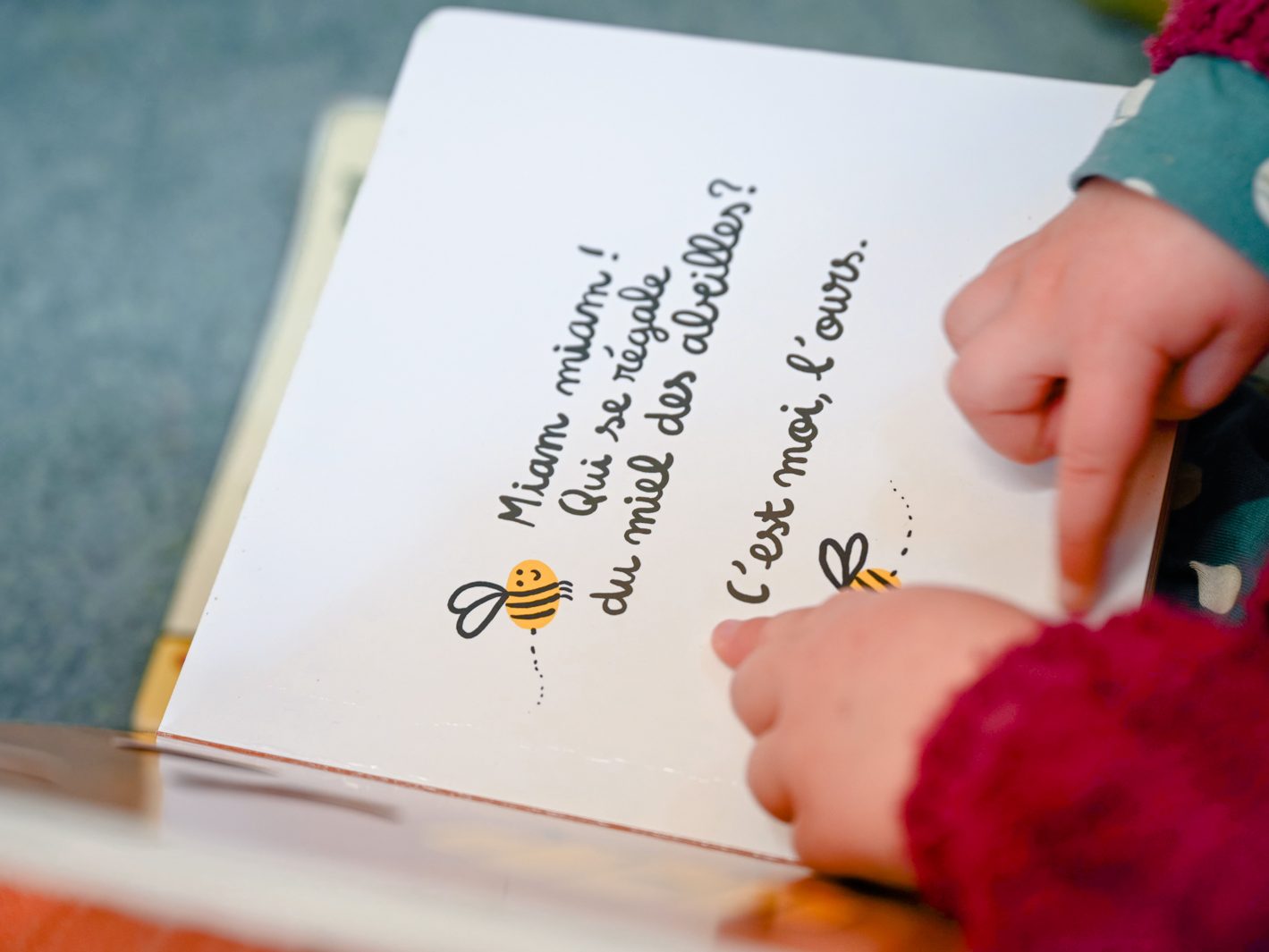
French
Physical Development
Details
Montessori aproach focuses on holistic development of the individual child. This includes child’s physical development. The enhancement of hand-eye coordination, concentration and sensorial abilities leads to the development of gross and fine motor skills, that supports children independence and sense of order.
Fine Motor Skills
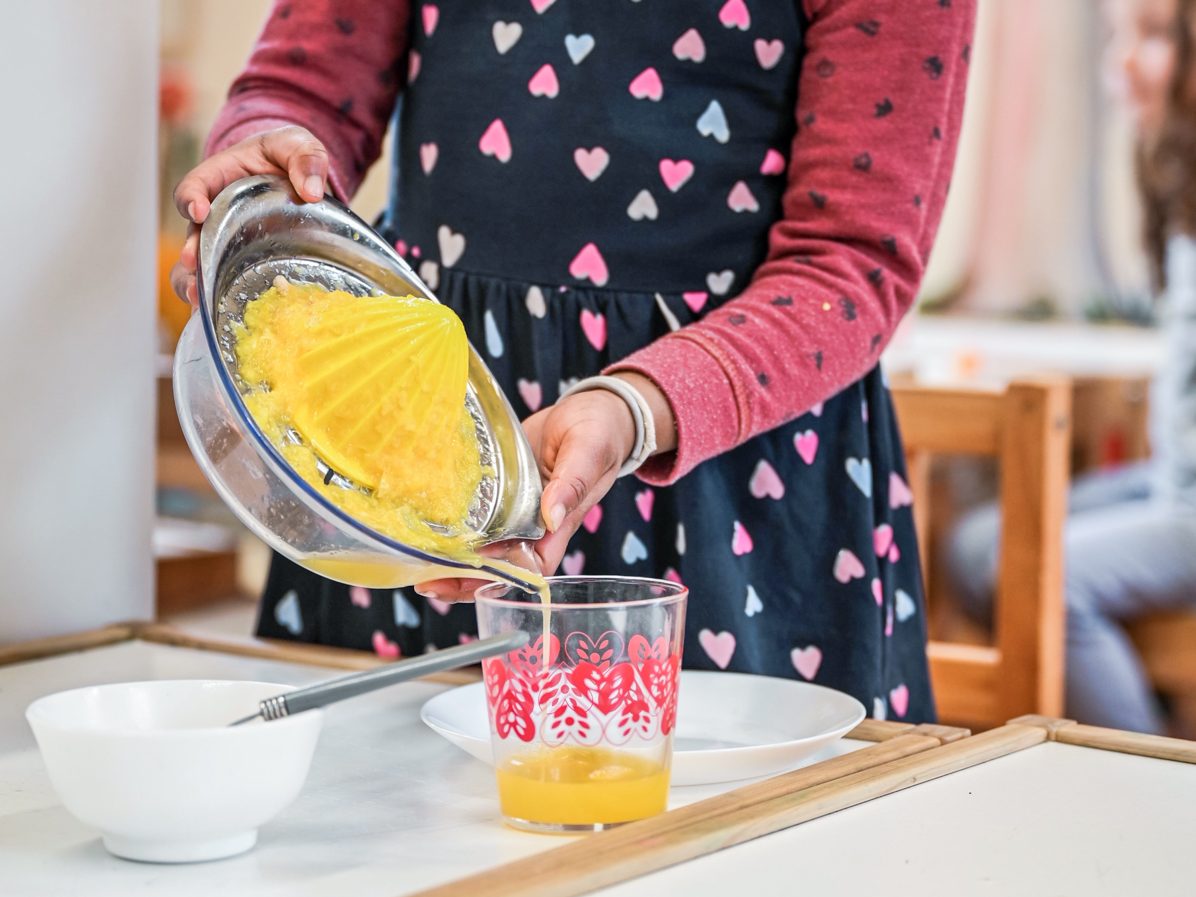
In the Montessori classroom, children participate in Practical life activities, which are known to improve a child’s fine motor skills (coordinated small muscle movements in the hands, wrists, and fingers) and hand-eye coordination (the use of the eyes to guide movements) and concentration. Actions, like grasping, reaching and releasing an object, and turning the wrist, are the types of fine motor movements that children learn and practice in a Montessori House, in order to prepare them for the daily tasks of life. They will have a lot of opportunities to do pouring from different jugs, transferring object with one handed tools and also threading to improve hand- eye coordination. As children grow, they will be able to engage in sewing and weaving activities, which develop their manual dexterity. The action of picking up objects with small tongs or tweezers develops a child’s pincer grip, which is a necessary precursor for learning how to write later on.
Gross Motor Skills
To develop the large muscles of the body, it’s important to reach gross motor milestones – such as walking, running, jumping and climbing, throwing and catching. In Manchester Montessori House we recognise how gross motor development presents many health benefits, boosts confidence and self-esteem, and the ability to assess risk. That’s why Montessori settings provide many activities that build muscle memory, creative movement, and motor planning. Children , while playing outdoors will have an opportunities to climb, hop and jump while building obstical course or using equipment provided. They will have space to improve their balance and spatial coordination, but also join different group games and activities .
 Manchester Montessori House